
Preventive Maintenance That Saves You from Bigger Repairs
A car usually gives warnings before it leaves you stranded. A drip on the driveway. A faint squeal at the first stop sign. A fluid that smells burnt. A belt with small cracks. None of these feel urgent on their own, which is exactly why they get ignored.
Preventive maintenance is the work that happens before failure. It is not about replacing parts for the sake of it. It is about inspecting the vehicle, finding wear early, servicing fluids before they break down, and replacing items that are close to the end of their useful life before they damage more expensive components.
That is the idea behind GP Auto Services’ approach to the “Behind the Wrench” series: show the real work that protects a vehicle, not just the repair bill that comes after something fails.

Preventive maintenance means looking before something breaks
Many drivers think maintenance means oil changes, tire rotations, and maybe a new battery when the old one gives up. Those things matter, but true preventive maintenance goes further.
It asks a simple question:
What is starting to wear, leak, loosen, crack, or degrade before it becomes a breakdown?
A technician cannot answer that question by looking at mileage alone. Mileage helps, but it does not tell the whole story. Two vehicles with the same mileage can be in very different condition depending on driving habits, climate, road quality, load, and service history.
A real inspection looks at the vehicle as a system. For example, a mechanic may check:
Belts and hoses for cracks, swelling, glazing, or soft spots
Brake pads, rotors, calipers, and brake fluid condition
Suspension parts for looseness, worn bushings, and leaking shocks or struts
Tires for uneven wear that may point to alignment or suspension issues
Fluid levels, leaks, color, smell, and contamination
Filters that affect engine performance, cabin air quality, or fuel economy
Battery health, terminal condition, and charging system operation
Drivetrain components such as axles, boots, mounts, and seals
The goal is not to create a long shopping list. The goal is to separate what is healthy, what should be watched, and what should be addressed before it turns into a bigger repair.
That distinction matters. A good shop should be able to explain the difference between a part that has mild wear, a part that is nearing service limits, and a part that creates a safety or reliability concern. Preventive maintenance works best when it is based on what the inspection shows.
Small leaks can become expensive repairs
A small oil leak is one of the best examples of why waiting can cost more.
At first, it may look harmless. There might be one or two dark spots under the vehicle. The oil level may stay close to normal between changes. The engine may run fine. It is easy to think, “I’ll deal with it later.”
Sometimes later is fine for a short time, as long as the leak is monitored. But a leak can spread, worsen, or contaminate other parts.
Oil leaking from a valve cover gasket, for example, may drip onto hot engine surfaces and create a burning smell. It may run down the engine and make it harder to identify other leaks. If oil reaches rubber components, it can soften or damage them over time. In some vehicles, oil can make its way near belts, hoses, wiring, or ignition components.
A small leak can also hide a bigger issue. What looks like a simple drip may lead the technician to find a failing seal, a loose component, a clogged crankcase ventilation system, or a previous repair that was not sealed correctly.
That does not mean every leak demands immediate major work. It means the leak deserves inspection. The best answer may be:
Clean and monitor the area
Replace a worn gasket or seal
Repair a related component causing excess pressure
Track oil level and recheck at the next service
Address the leak now because it is reaching other parts
The key is timing. A small repair done early can prevent a larger repair later. That is the entire point of preventive care.
Fluids protect more than people realize
Fluids do not last forever. They deal with heat, pressure, moisture, friction, metal particles, and chemical breakdown. When fluids degrade, they stop protecting the parts they are meant to protect.
Engine oil is the easiest one to understand. It lubricates moving parts, helps manage heat, suspends contaminants, and protects internal surfaces. When oil gets old or contaminated, it cannot do that job as well.
But oil is only one part of the picture.
Brake fluid absorbs moisture over time. As moisture content rises, brake fluid can become less effective under heat and may contribute to corrosion inside the brake system.
Coolant helps control engine temperature and protects against corrosion. Old coolant can lose its protective qualities, which can affect the radiator, heater core, water pump, thermostat, hoses, and internal passages.
Transmission fluid helps with lubrication, cooling, and hydraulic operation. When it becomes dark, burnt, contaminated, or low, shifting problems and internal wear can follow.
Power steering fluid, differential fluid, transfer case fluid, and other specialized fluids all have jobs that are easy to forget until something becomes noisy, rough, or expensive.
A maintenance schedule gives a useful baseline, but inspection still matters. Some vehicles need service sooner because of severe driving conditions, towing, short trips, stop-and-go traffic, extreme temperatures, or age. A fluid that looks and smells healthy may not need service yet. A fluid that has clearly degraded may need attention even if the mileage looks “close enough.”
That is why responsible recommendations should come from both service intervals and real observations.
Wear items should be replaced before they damage other parts
Every vehicle has parts designed to wear. Brake pads wear. Tires wear. Wiper blades wear. Belts, hoses, filters, bushings, spark plugs, and suspension components all have service lives.
The problem starts when a wear item gets pushed past its limit.
Worn brake pads are a clear example. Replacing pads on time is normal maintenance. Waiting until the pads grind into the rotors can turn that maintenance into a more expensive brake repair. In severe cases, heat and metal-on-metal contact can affect calipers, hardware, and braking performance.
A cracked belt may seem minor until it breaks. Depending on the vehicle, a broken belt can leave the driver without charging, cooling, air conditioning, or power steering assist. A worn hose can fail suddenly and cause coolant loss, overheating, or a tow.
A dirty air filter can restrict airflow. Worn spark plugs can contribute to rough running, misfires, poor fuel economy, or added stress on ignition coils and other parts. Tires worn unevenly may point to alignment, suspension, or steering issues that will keep destroying new tires if the root cause is not fixed.
Preventive maintenance does not mean replacing everything early. It means replacing the right things at the right time.
A trustworthy inspection helps answer practical questions:
Is the part worn, or has it failed?
Is the wear normal for the mileage?
Is another issue causing the wear?
Can the customer safely monitor it?
What could be damaged if the repair is delayed?
Is there a safety concern?
Those questions keep maintenance grounded in evidence.

Good maintenance advice should not feel like pressure
Drivers often worry that a shop will recommend work they do not really need. That fear is understandable. Car repairs can be stressful, and not everyone feels comfortable challenging a recommendation.
GP Auto Services builds maintenance recommendations around inspection findings, not pressure sales. That means the conversation should be clear, specific, and backed by what the technician actually found.
A helpful recommendation explains:
What was found during the inspection
Why it matters
Whether it affects safety, reliability, performance, or comfort
How urgent it is
What may happen if it is ignored
Whether it can be monitored for now
What repair or service is recommended
Photos, measurements, test results, and technician notes can make a big difference. If brake pads are low, showing the remaining material helps. If a hose is swollen, a photo helps. If a leak is active, showing the source helps. If a fluid is burnt or contaminated, explaining what that means helps.
The customer should not have to guess whether something is critical or optional. A good shop makes priorities clear.
A simple way to think about recommendations is this:
Needs attention now
Plan soon
Monitor
Safety concerns, active failures, severe leaks, or conditions likely to cause immediate damage
Wear items near service limits, fluids due by condition or interval, leaks that are worsening
Early wear, minor seepage, items that are still safe but should be rechecked
This approach protects the vehicle and the customer’s budget. It also builds trust because the recommendation matches the evidence.
Why prevention saves money and reduces breakdowns
Preventive maintenance saves money in a practical way. It reduces the chance that one neglected issue will create several repairs at once.
Replacing worn brake pads before they grind can help protect rotors. Fixing a coolant leak before overheating can help protect the engine. Addressing an oil leak before it contaminates other parts can limit the damage. Servicing fluids before they break down can help the systems they protect last longer.
It also reduces inconvenience. A planned repair can be scheduled. A breakdown chooses the time for you. It might happen before work, during a trip, in bad weather, or when the vehicle is fully loaded with family, tools, or groceries.
Breakdowns often bring extra costs beyond the repair itself, such as towing, rental transportation, missed work, or lost time. Even when the repair is simple, the disruption can be frustrating.
Preventive maintenance gives the driver more control.
That does not mean a vehicle will never break. Mechanical parts can fail without warning. Road debris, extreme weather, manufacturing defects, and age can all play a role. But regular inspections and maintenance improve the odds. They turn many surprises into planned decisions.
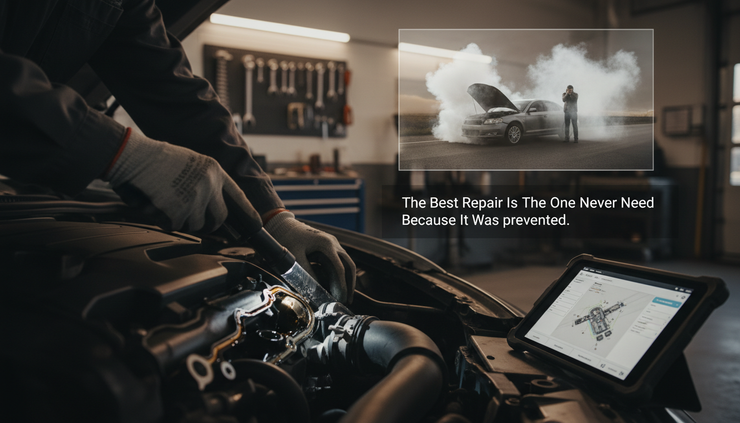
The best repair is the one you never need because it was prevented.

A better way to look at car care
Preventive maintenance that saves you from bigger repairs is not about fear. It is about paying attention early, making informed choices, and giving the vehicle what it needs before a small issue becomes a large one.
A good inspection can spot worn components before failure. Fresh fluids can protect expensive systems before damage starts. Replacing wear items on time can prevent them from taking other parts with them. Even something as small as an oil leak can become a smarter, simpler repair when it is handled before it spreads.
The takeaway is simple: do not wait for the breakdown to tell you what your vehicle needed months ago. Let the inspection tell the story, then make the repair decisions that make sense.

Comments